


Norwin Ninjas TEST 1-week per month. (typically the second to last week of the month). You will test during or at the end of your regular class time/day.
When you are eligible to test, you will receive and email. Make sure emails from SPARK (our dojo management software) are in your safe list and not (junk/spam).
Students must wear a full gi—no t-shirts are permitted for tests. Uniforms should be clean and ironed. Water or Gatorade is always allowed (just raise your hand to drink). Test fees must be pre-paid before the exam takes place. If you miss your scheduled test, you may either:
Schedule a private test (if an examiner is available, with an additional fee based on the private lesson rate), or
Test the following month at no extra charge during the group exam.
Intro Evaluation Criteria:
All exams at our dojo are influenced by multiple factors and are not strictly pass/fail based on technique alone. Considerations include:
Minimum requirements (Kihon / Kata)
Technique (Martial Arts)
Character development (Martial Way)
Vocabulary / History
Class attendance
Intensity / Effort
Abilities / Disabilities
Maturity
Private lessons
Important Reminder:
Never compare your progress to your line-mate’s. Your journey is individual—you versus yourself. Students with limitations or disabilities (physical or mental), chronic injuries, or health conditions are evaluated with these factors in mind. In such cases, heart, attitude, and determination are key. As Sensei says, “will over skill” can sometimes outweigh technical proficiency. Personal development is, after all, personal.
Intro Ninjas:
The normal progression is from white belt to white belt with a yellow stripe. Students wishing to attempt a full yellow belt as an intro student may consider optional private lessons. An Intro Ninja may earn a yellow belt if they learn the entire Heian #1 (first kata), along with the required vocabulary and basics. This kata is not typically taught in the intro class and is not required for the white belt with yellow stripe, which most ninjas earn first.
Pass / Fail / Retest Overview:
It is normal for some students to pass and others to need a retest. Testing is a part of the learning process and a reminder that every rank must be earned. Our goal is to help each student exceed their own potential, so evaluations are made on an individual basis.
Pass:
Self-explanatory. Results are announced one week after the test at the end of class.
Fail:
The student did not meet minimum requirements. They must wait 1–3 months before retesting. This is determined after a discussion with Sensei regarding the preparation needed.
Retest:
In rare cases where most of the exam is passed but a single area needs improvement, a retest may be scheduled within one week (prior to results) after consulting the examiner. A private lesson may help address the issue. There is no fee for the evaluation, and rank is promoted immediately upon successful completion.

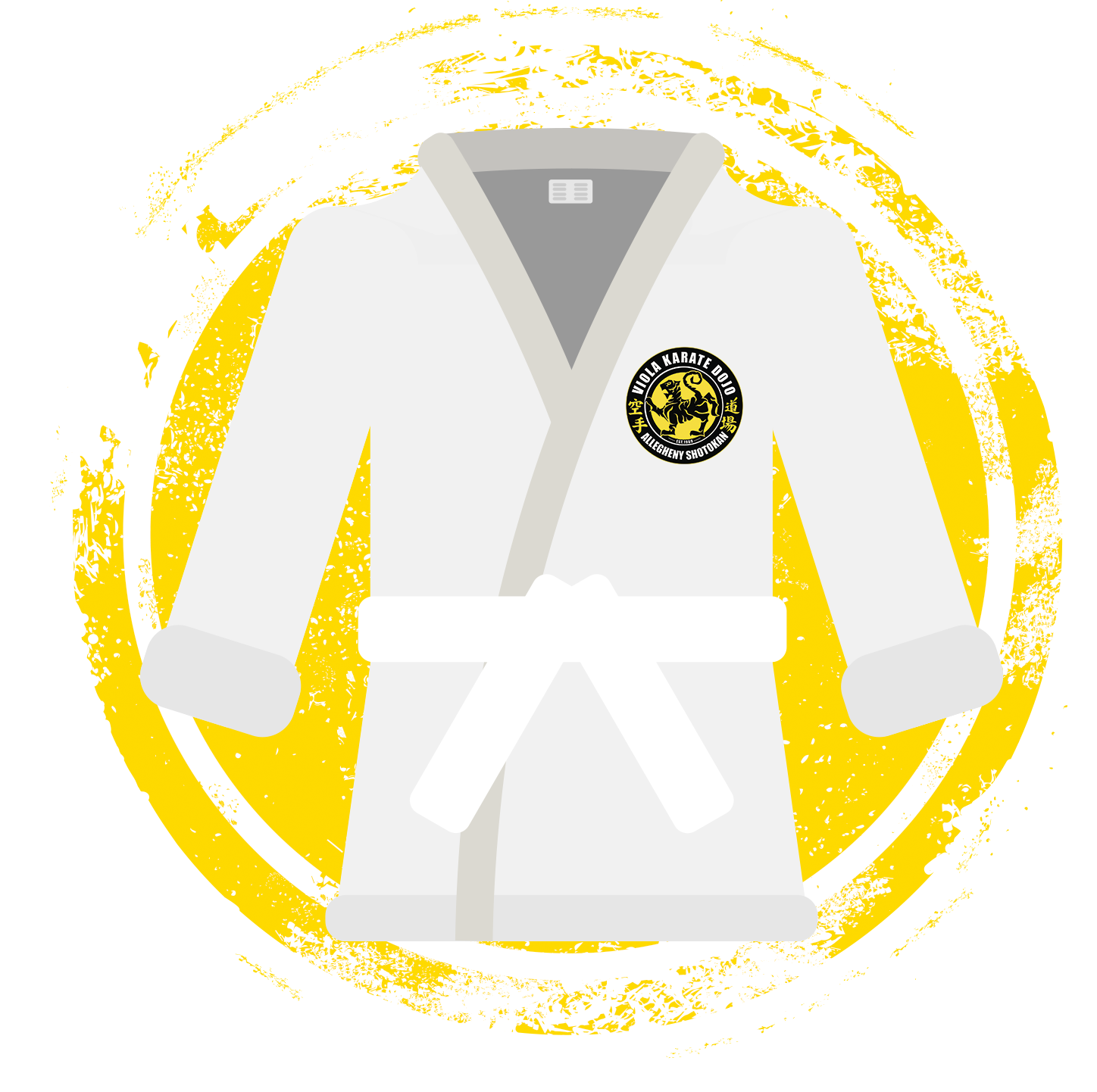
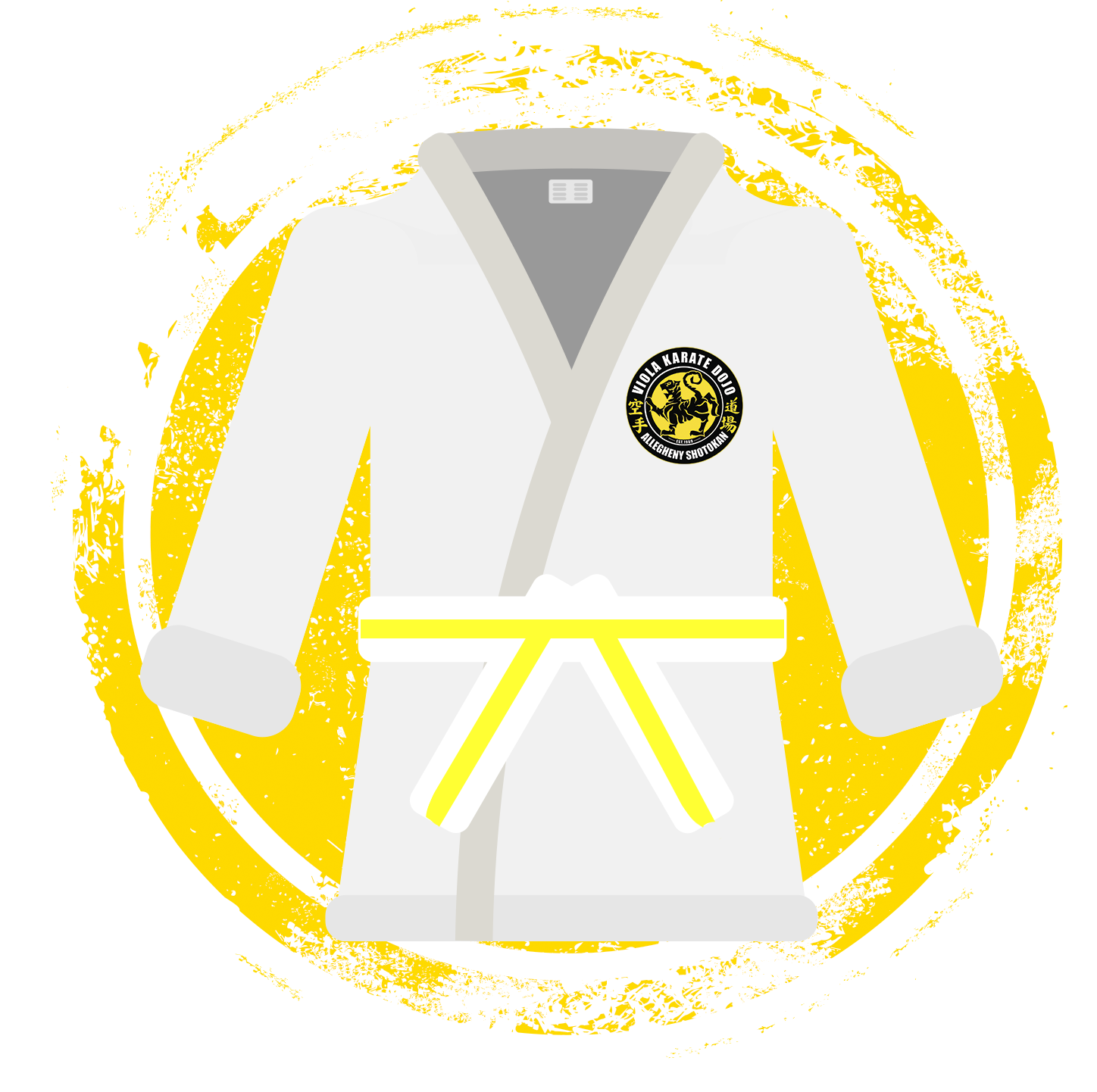
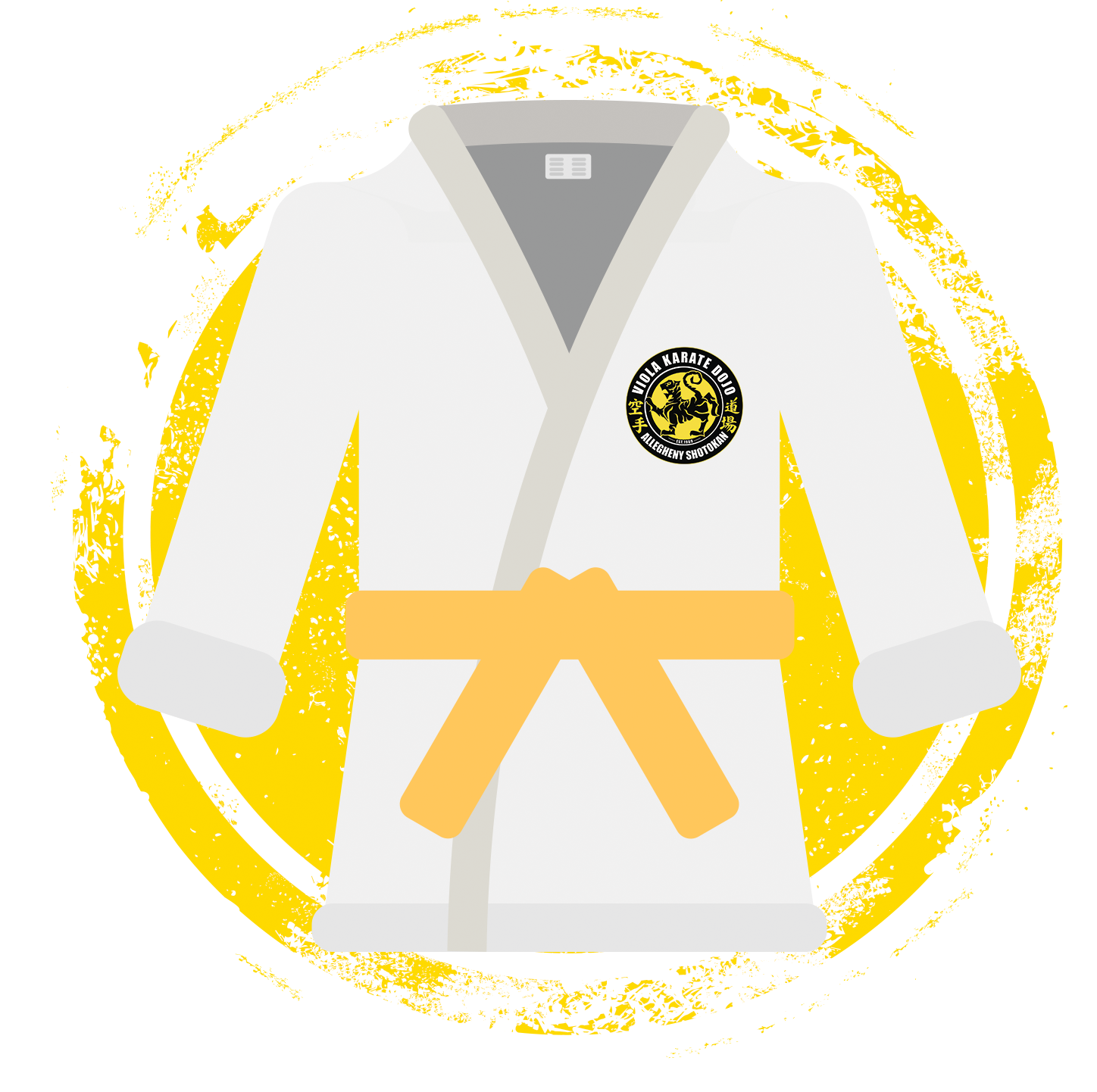
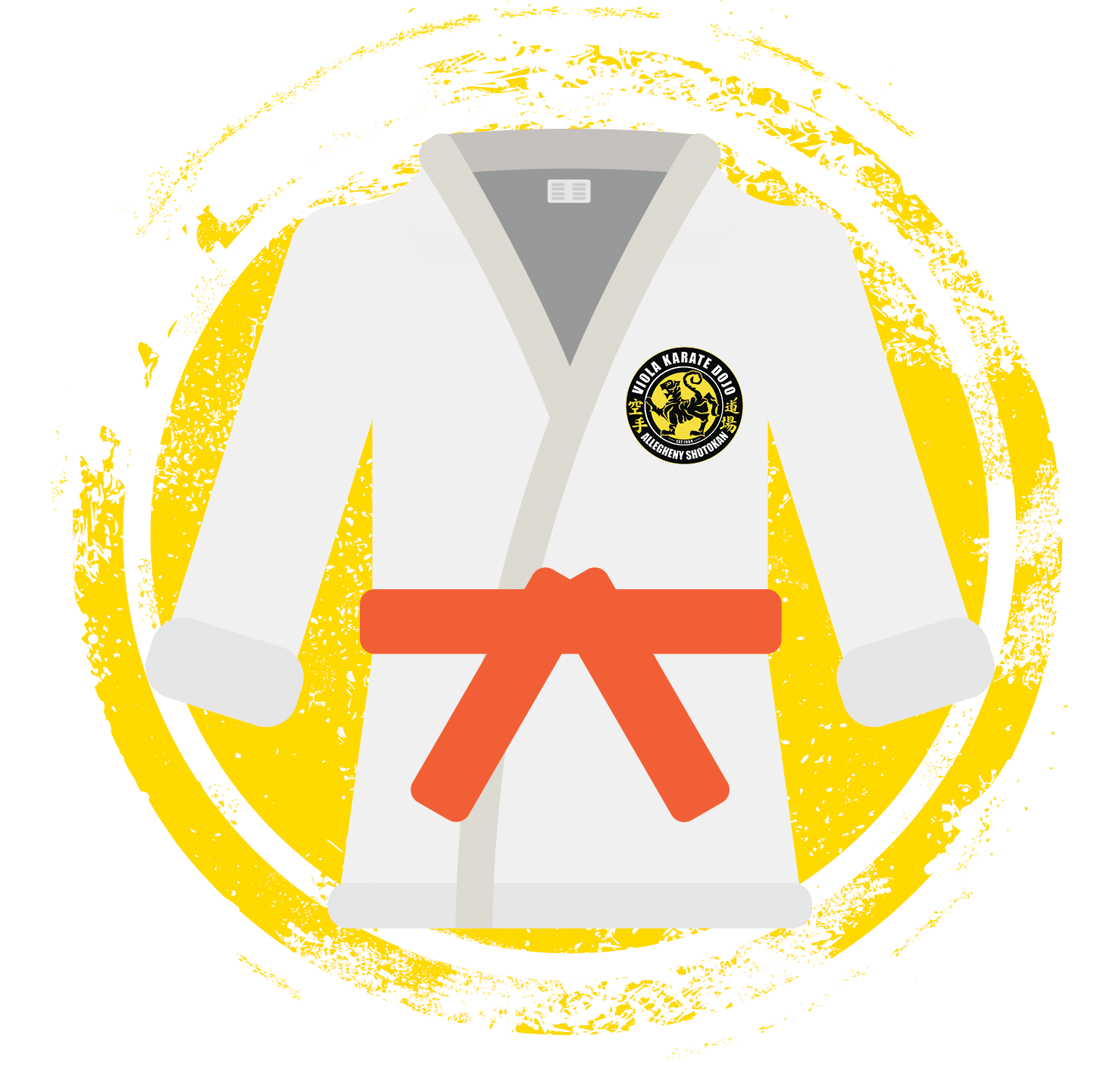

Karate uses a belt system to visually represent a student’s progress, skill level, and experience. Here’s why belts are used in karate:
Belts provide clear goals and milestones for students. Each new belt represents a level of achievement and gives students something tangible to work toward. The belt colors represent a hierarchy of skill, allowing instructors and students to understand each other’s level at a glance.
Each belt level comes with not just techniques, but also mental and character development.
The belt system was influenced by Japanese martial arts tradition, particularly Judo. Gichin Funakoshi, the father of modern karate, adopted this concept to bring order and modern educational structure to karate.
The belt journey reminds students that karate is not a quick path—it’s about continuous growth. A black belt isn’t the end, it’s often seen as the beginning of true mastery.
Test Etiquette / Information
Yellow – HEIAN SHODAN
Orange – HEIAN NIDAN
Blue – HEIAN SANDAN
Green – HEIAN YODAN
Purple – HEIAN GODAN
Brown
We use the traditional Japanese Kyu/Dan ranking system:
Kyu ranks count downward (⇩) — the lower the number, the higher the rank.
Dan ranks count upward (⇧) — the higher the number, the higher the rank.
For example, a 1-Kyu brown belt (with 5 tips) is eligible for the pre-black belt test.
Remember: A black belt does not mean “expert.” The title Shodan means “beginning degree.” It’s a major milestone—like graduating high school—but afterward, the real learning begins (like entering college).
Dojo Evaluation Criteria
Exams at our dojo are influenced by a variety of factors—not simply pass/fail checklists. These include:
Timing Between Tests
Minimum Requirements
Learning higher-level katas is admirable—but not if it comes at the expense of your current rank’s requirements.
Knowing a higher kata does not make you eligible for the belt it corresponds to. These are considered bonus material.
Kata is only one factor in the test. You must:
This list often determines whether a retest is needed.
Additional tools such as private lessons, kata class, and Saturday class can help you accelerate. High-level kumite may also influence promotion (at Shihan’s discretion).
Progression Path
The journey from White → Yellow → Orange → (novice ranks) varies, especially between adults/teens and Ninjas. While skipping stripes is possible, it’s not the norm.
Even if you know the “technical” material, remember: progression is a marathon, not a sprint.
Scoring System
Don’t Compare Progress
Your journey is individual—you vs. yourself.
Students with limitations, chronic injuries, or disabilities are evaluated based on effort, attitude, and determination (what we call “will over skill”).
These traits can outweigh technical proficiency in certain cases.
Sparring Guidelines
Intro-Ninjas (Beginners)
Line-Up Etiquette
Tournament Notes
Intermediate Ranks (Blue ⇆ Green)
Blue Belts (intermediate level), the student must:
Advanced Ranks (Purple ⇆ Brown)
Perspective
Sensei Bill Jr. and Gabby never skipped a single belt or stripe. They earned every level in succession.
Follow their lead: Take it one step at a time and enjoy the journey.
Test Outcomes
Testing Etiquette
Expedited Testing
If a student shows exceptional maturity or skill, they may be eligible for an expedited test (less than 4 months).
This is rare and only happens through nomination by a senior black belt.
It is not polite to ask—it will happen organically if earned.
Tests Must Demonstrate: